While Viaje ships cigars to its retailers on a fairly regular basis, it’s not every day that the company produces a new line, so when it does, it’s a bit more intriguing to see just what new idea or concept is has come up with.
In mid-June, the company announced a new addition to its portfolio that it calls Honey Bale. As with many of its releases, the company didn’t disclose many of the usual details we like to include, but it did say that it is made in Nicaragua, just not at which factory or using what kinds of tobaccos.
In social media posts, the company said, “In every harvest, most bales meet expected standards of aroma, texture, and consistency. Yet, occasionally, a rare few emerge with distinctive qualities; deeper sweetness, richer aroma or a uniquely balanced character that sets them apart from the rest. These exceptional bales are often noted by experienced selectors and valued quietly.”


Beyond being a new line, the 5 1/4 x 54 robusto extra is notable because the company added a gold foil cap atop the regular tobacco cap. A spokesperson told halfwheel that the company did experiment with closing the cigar with just the gold cap.
The cigars come in 30-count jars sealed by a bamboo lid, with pricing set at $11.53 and $346 per jar. Production numbers were not disclosed.
The Viaje Honey Bale shipped alongside what has become a near-annual release for the company, the Viaje Birthday Blend, a series that started in 2016 to celebrate the birthday of Andre Farkas, the company’s founder.
As with previous releases, there’s a standard Birthday Blend 2026 blend, plus one cigar in the box wrapped in gold foil, included for good luck. That cigar uses a different blend, though Viaje hasn’t said what makes it different. This year’s box contains 49 cigars, with pricing set at $11.47 per cigar, or $562 for the box of 49.

- Cigar Reviewed: Viaje Honey Bale
- Country of Origin: Nicaragua
- Factory: Undisclosed
- Wrapper: Undisclosed
- Binder: Undisclosed
- Filler: Undisclosed
- Length: 5 1/4 Inches
- Ring Gauge: 54
- Shape: Round
- MSRP: $11.53 (Jar of 30, $346)
- Release Date: June 2026
- Number of Cigars Released: Undisclosed
- Number of Cigars Smoked For Review: 3
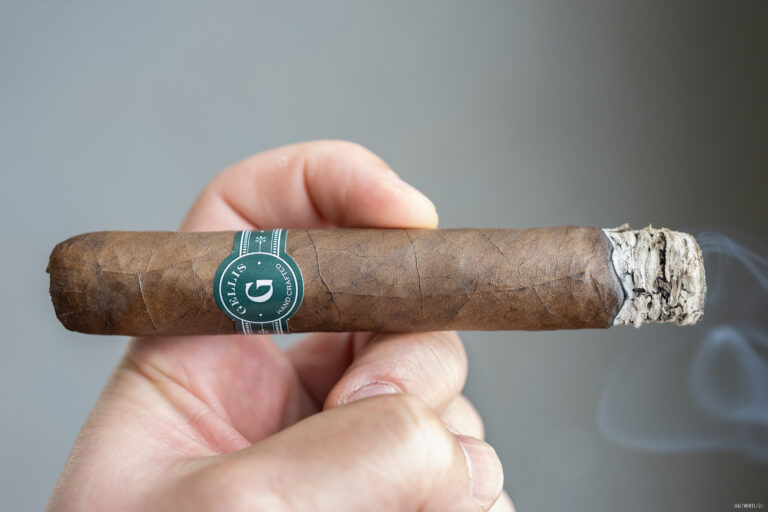
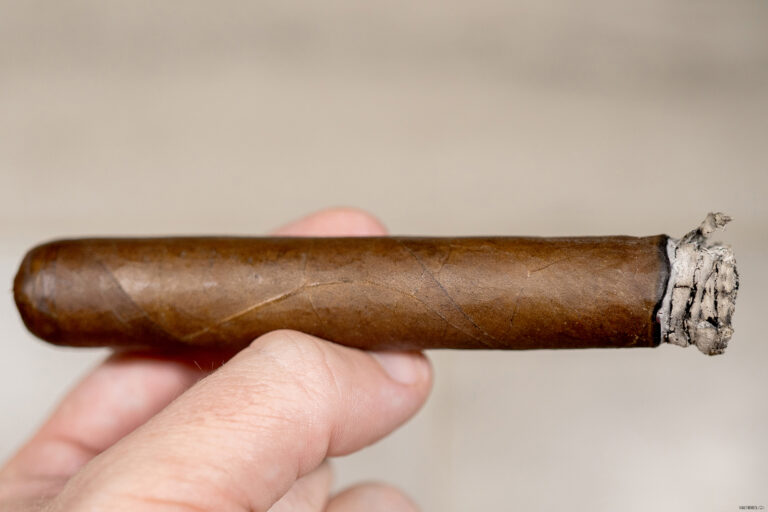
I’m a bit surprised to see a Viaje without some sort of band on it, and as someone who likes to see cigars with some sort of identification on them, that and the lack of a SKU sticker on the cellophane does irk me a bit. The gold foil on the cap is certainly an identifier, but I wonder if, a year from now, I would remember what this cigar was. That said, it provides a good target line for me to cut the head of the cigar,. In lining up my cutter, I am reminded that this is a piece of foil that has been adhered to the cap of the cigar, not gold leaf that has been adhered, meaning I can unpeel it rather easily, as well as just cut it off. All three cigars are firm with little give, and the third cigar has a handful of spots that I would call hard. There’s a little bit oiliness to the wrappers, something that is not immediately apparent upon visual inspection, but is revealed while checking the cigars’ densities. The wrappers have a meaty brown color to them, maybe even a little hint of dark redness, and are evenly colored, which helps hide the seamlines. The vein structure is pretty typical in both size and number, but the detail of the smaller nutrient network in between the veins is pretty interesting to look at. The aroma from the first cigar has a bit of a smoked honey sweetness, while the second leans more to a butter and tangy barbecue sauce combination, with some sneeze-inducing pepper on the finish. The third cigar makes me sneeze as well, but the aroma is more of a dried bourbon barbecue sauce. The first cigar’s cold draw is near perfect in terms of airflow, while the flavor doesn’t veer too far off what I’d call a generic tobacco flavor. I get a little lip tingle as well. The second and third cigars have much firmer draws, and thinking about the second in the context of the smoking time of the first cigar makes me wonder just how long I’ll be smoking this one. The flavor and lip-tingling sensation are largely the same as they were in the first cigar, though this time I find a little sweetness on my lips, not enough to make me think this is a sweet-tipped cigar, but enough to catch my attention.
The Viaje Honey Bale starts out with a familiar spice and pepper combination, a fairly pointed flavor that I wouldn’t call rough, but it’s not shy about hitting several points in my mouth with sensation. Retrohales are fairly peppery as well; a clean, classic black pepper sensation that isn’t messing around but also not trying to do too much. Just about an inch in, there’s some sweetness emerging, and again, it’s kind of a smoky honey sensation, and it is a rather food-like flavor, something I’d be expecting to be whipped up by a restaurant as a spread. Creaminess is next to join the profile, and it’s thick in both flavor and texture, with a little vanilla mixed in at first, though that fades. There’s still some decent black pepper in the nose on retrohales, seemingly on standby when a little more stimulation is wanted. Flavor starts medium-full but finishes medium-plus, while the body heads in the other direction, going from medium to medium-full. Strength is mild thus far. Construction is pretty solid; the draw is a touch firm, the burn line is slightly uneven, smoke production is good and combustion is problem-free.

The second third of the Viaje Honey Bale starts with a bit of a struggle between the smooth creaminess and a rougher earthy note that has both spice and pepper pulling on the reins. Retrohales are very good, offering a sensation of black pepper that unfolds in the nostrils much like a multi-stage firework. It starts with a decent-sized bang and is followed by a round or two of smaller explosions. The flavor sits in a spot where it feels like it is poised to make a change, but never really does. Other than that, the creaminess steadily diminishes before making a rather sudden exit as this section comes to a close. It’s an enjoyable section, if one that feels like it’s in a holding pattern. Flavor and body are medium, while strength is mild. Construction remains very good, though the ash feels more fragile in this section than it did in the first third.

As the final third begins, pepper continues to drive retrohales, though the earthiness that has been a solid, thick base note starts to break up and takes on a looser, almost dustier texture. This continues throughout this section, never a drastic shift in the profile, but a steady change. A little roughness emerges in the final inch or so, enough that I’d call it irritating and cough-inducing, with a more pronounced finish that isn’t the most palatable flavor. Flavor gets up to full, though I think there are some other factors contributing to that level of sensation intensity. The body sits medium-full, while strength is still mild. Construction is generally good, though the second cigar’s draw is firmer than I would like, and the final third of the third cigar runs into some combustion issues. That said, I was generally pleased with the technical performance of the Viaje Honey Bale.

Final Notes
- I do wonder how many—if any—of the gold caps will detach during transit, as well as once they’ve been in someone’s humidor for a while.
- This is another reason why I believe everyone should have some blank cigar bands on hand so you can add your own label, noting what it is and maybe when it was purchased.
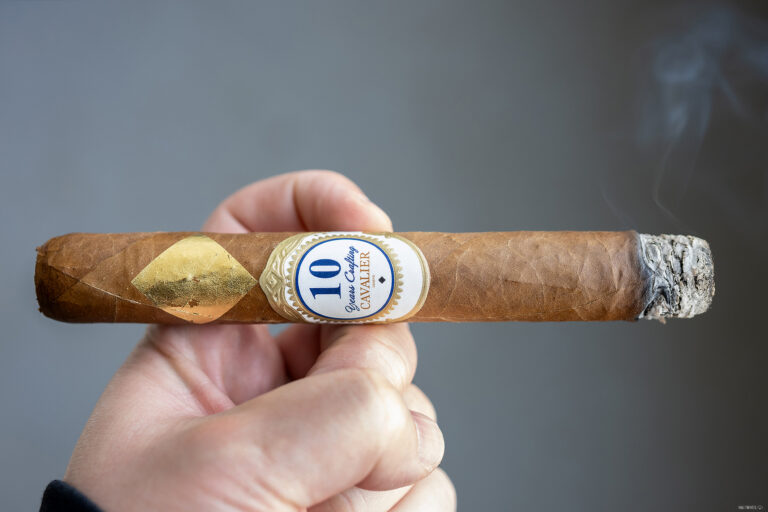
- I definitely thought for a while that the Viaje Honey Bale’s cap was going to use a smokable gold leaf similar to that which Cavalier Gèneve uses on its cigars. I can’t say I knew it was a piece of gold foil paper that had been adhered to the head of the cigar.
- This is the second time that Viaje has used the word honey in the name of a cigar. In 2012, the company released the Honey & Hand Grenades line, notable for the section beneath the band that is wrapped in red foil. The line was last released in March 2025.
- Viaje has a lengthy history of using jars or other cylinders for packaging. Previously, it has packaged cigars in porcelain jars, ceramic jars, plastic jars, glass jars and metal cylinders.
- Nicotine strength was a non-factor for me, as I never really felt any effects.
- The cigars for this review were purchased by halfwheel.

- The company lists these as a 5 1/4 x 54 robusto extra. The numbers above are the measurements we found for the three cigars used for this review. I can’t say I immediately noticed a difference in the third cigar that I could attribute to the significant variation in ring gauge when compared to the other two. Prior to smoking the cigars, I saw the numbers, but once the cigars were lit, the difference didn’t register as a mental note to keep in mind.
- Final smoking time was two hours and 15 minutes on average.
- Site sponsors Atlantic Cigar Co. and Small Batch Cigar carry the Viaje Honey Bale.
88
Overall Score
The Viaje Honey Bale is a solid cigar, offering full, rich flavor from start to finish, highlighted by a few touches of what I would call a smoked honey sweetness that really makes this cigar sing. I wished there was more of it, and with each successive cigar, I made sure to slow down and savor it for as long as it was around. Beyond that, there are what I would call a hallmark Viaje flavor profile, with sufficient amounts of pepper, earth and then some creaminess that creates both an great complement to the flavor, as well as becoming a point of back-and-forth tension at the start of the second third. Construction was also pretty solid, not perfect, but also pretty good among cigars I’ve smoked lately. I’d certainly recommend trying one or two of these, just pay close attention for when that sweetness arrives in the profile.
Nicaragua
Robusto Extra
Viaje
Viaje Honey Bale