Last month, Drew Estate announced a new consumer rewards program called DE30, a nod to the company’s 30th anniversary, which it is celebrating this year.
Consumers receive reward points for attending Drew Estate events, making purchases at said events, uploading receipts of other purchases of Drew Estate products, or even by following the company on social media. Those points can be used to redeem various swag, with some of the higher-end items including items made by Subculture Studios, an art studio located adjacent to the company’s main factory in Nicaragua.
As part of that announcement, the company announced seven new cigars, all of which are line extensions. There are two different three-cigar samplers, each of which includes various Drew Estate blends in different figurado shapes. Those three-packs can be found at stores nationwide, except in California. Drew Estate isn’t registering the three-packs with California’s UTL.
The seventh cigar is the Liga Privada Único Serie Tres Serpientes, a culebra version of the Liga Privada H99 blend. It is only offered at select Drew Estate events throughout the end of the year.


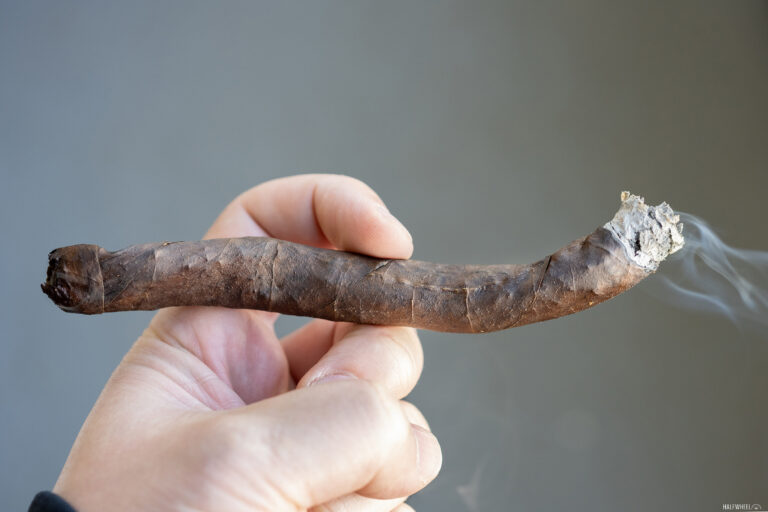
Culebra is the Spanish word for snake, and in the cigar world, it refers to a cigar that is actually multiple cigars. Typically, as is the case here, they are made using petite lancero-sized cigars. After the wrapper is applied, multiple cigars are twisted together and then tied with some twine. As the cigars dry out in the aging room, the shape remains and the end result is arguably the most unique-looking vitola in the humidor. Typically, a culebra is made by combining three cigars, though some variants are made with just two.
In order to smoke the culebra, the twine is undone and the individual pieces are then smoked like a normal cigar. Despite their gnarly shape, the cigars smoke the same as any normal parejo.
While not branded as an H99, it is said to use the same components. Instead, it technically falls under Drew Estate’s Único Serie, which includes a hodgepodge of Liga Privada cigars ranging from the Papas Fritas to the Panchetta, as well as plenty of cigars that are not named after foods.

- Cigar Reviewed: Liga Privada Único Serie Tres Serpientes
- Country of Origin: Nicaragua
- Factory: La Gran Fábrica Drew Estate
- Wrapper: U.S.A. (Connecticut Habano-Corojo Hybrid)
- Binder: Mexico (San Andrés Negro)
- Filler: Honduras, Nicaragua & U.S.A. (Pennsylvania)
- Length: 6 1/4 Inches
- Ring Gauge: 43
- Shape: Round
- MSRP: $17.78 (Box of 9, $160)
- Release Date: September 2026
- Number of Cigars Released: Undisclosed
- Number of Cigars Smoked For Review: 3
While perhaps the most interesting vitola to look at, I don’t find culebras to be the prettiest shape for a cigar. The cigars are twisted, but in the process, there are also indentations made into each piece. These bends and dents combine with the veins and texture of the H99’s wrapper, which makes the cigar look like it has more bumps than it actually does. Each of the first three cigars I look at has a busted cap, something that’s not intentional. I looked at one of the other culebras in the box and only one cigar had a broken cap. The wrapper is medium-plus or medium-full with a scent that reminds me of fire-cured tobacco, though nothing else. The feet have a full aroma with some of the fire-cured smell but also a sweet mint that reminds me of muddling mint to make a mojito. The first two cigars have draws that are more open than I’d expect for the ring gauge with some of the fire-cured tobacco flavor, sweetness that ranges between berries and a lighter floral flavor, and there’s also some plain oatmeal. The third piece of the first culebra I selected had a broken wrapper, so I broke up another culebra and ended up with a piece that still had a cap. That cigar has a concerning chemical flavor along with some lemon, around medium-full.
The Liga Privada Tres Serpientes start around full, smooth and straight to the point. Flavors include sweet nuttiness, toasty woods, a metallic earthiness, burnt coffee, oatmeal and some varying degree of burnt popcorn. Throughout the first third, the toastiness tends to act more as the binding flavor than a leading one, but it’s the most prominent thing in my notes. Nuttiness and cedar, oftentimes with the toasty accent, lead white pepper, creaminess and some lemon. The finishes of the first two cigars are sweeter with nuttiness, oatmeal and sweet barbecue sauce, while the third cigar is grittier, though with many of the same flavors. Retrohales produce mostly the same list of flavors, though the first cigar adds some roasted potatoes, while the second cigar has reminders of whiskey and gin combination, sort of like the aftertaste of an incomplete cocktail. Otherwise, it’s nuttiness, woods, black pepper, white pepper, and, of course, toastiness. At one point, the finish of the first cigar has a distinct oily fried bread flavor, almost like the shell of an empanada, while the other two cigars get much creamier. Flavor is full, while body and strength are either medium-plus or medium-full. Construction is great, though I’m surprised that the cigar isn’t burning quicker.

While the toastiness remains, it’s now serving as a more isolated main flavor as opposed to filling the space between other flavor notes. The woodiness is the leading flavor for the second third, though there’s also an uptick in floral flavors as well as a generic earthiness. Retrohaling leans into the woodiness as well, though a lighter burnt wood flavor than I would have imagined. In terms of interesting aspects, the first cigar has a cannabis-like herbal flavor, the second cigar gets some kiwi sweetness, while the third cigar has a raw dough flavor and some lime. The finish gets drier with lots of plain crackers over some salt water, sweet barbecue sauce and now more of a Liquid Smoke-like toastiness. Flavor is full, again body and strength vary between medium-plus and medium-full with the third cigar being slightly milder than the other two. Construction remains great and the combustion rate has picked up.

At some point during the final third, each cigar hits a wall. I find each fades a bit in intensity while also gaining a mild bitterness that zaps the finesse of some of the individual flavors. That said, the list of flavors is still quite enjoyable: nuttiness is now more or less in line with the toastiness, sitting atop saltiness, sugar, sunflower seeds and a secondary, even drier toastiness. The third Tres Serpientes is a bit different, with more of a roasted flavor in lieu of nuttiness. Out of nowhere, two cigars add mint to the retrohale, which really brightens the experience. That’s especially true as the toastiness continues to get drier, though at times, I get a more distinct flavor that reminds me of charcoal. Flavor is full or medium-full, while body is medium-plus or medium-full, though strength is universally medium-plus. From start to finish, the construction is excellent with no issues other than the annoyance of trying to fit a culebra in an ashtray.

Final Notes
- Tres Serpientes is Spanish for three snakes.
- While Drew Estate’s reward program is somewhat unique for the cigar industry, it reminds me of Camel Cash, the popular R.J. Reynolds rewards program that was discontinued as part of the Master Settlement Agreement.
- For years, Drew Estate’s Natural line, now known as Larutan, had a culebra called Medusa.
- In August, Tatuaje released the Tatuaje Old Man and the C Monster. This cigar got released in September, and just last week, Hooten Young announced a new culebra. Four consecutive months of a new culebra would probably be an industry record. The culebra is not a popular vitola.
- Because of how many components went into the DE30 announcement, I think this cigar in particular got overshadowed. I’m a bit surprised Drew Estate didn’t try a tiered announcement structure: announce the box-pressed Feral Flying Pigs one week, announce the Supremas another week, announce Tres Serpientes on another week. If I had to guess, all of the different components created a lot of logistical complexity and would have made that impossible.

- These cigars don’t come with the normal twine; however, I can see where it once was. There were thick indents at the bottom and top of each cigar.
- If your number one concern is smoke production, Liga Privada remains the category leader. Even in a weird shape like this, there’s noticeably more smoke production than the competition.
- Drew Estate advertises on halfwheel.
- The cigars for this review were purchased by halfwheel.

- Drew Estate lists the Liga Privada Único Serie Tres Serpientes as 6 1/4 x 43 cigars.
- I oftentimes find culebras to smoke a bit quicker than their straighter counterparts, something that was called into question when the first cigar took two hours to smoke. The other two each took right around 90 minutes, more in line with what I’d expect.
91
Overall Score
I found the Liga Privada Tres Serpientes to be a fun expression of what I think the H99 is. Probably more due to the ring gauge than the shape, the flavor profile is less complete than the other vitolas I’ve smoked, but removing some of the components seems to have allowed for some other parts to shine. That said, it’s a bit of an enigma of a cigar. The strength never matches the looks or the flavor, while the cigar’s most complex flavors—the various types of mint—seem to be more a result of pepper being restrained. Compared to the rest of the catalog of funky Liga Privada shapes—Flying Pig, Feral Flying Pig, Nasty Fritas—I’d much rather smoke this. It’s a good Liga Privada.
Culebra
Drew Estate
La Gran Fábrica Drew Estate
Liga Privada H99 Connecticut Corojo
Liga Privada Único Serie
Liga Privada Único Serie Tres Serpientes
Nicaragua