
Today, we will review the Karatoba in the K50 (Toro) size from Oz Family Cigars. Karatoba is the fourth regular production line offered by Oz Family Cigars, a brand founded by Tim Ozgener. The Ozgener family is well-known for establishing CAO Cigars, which was sold to Swedish Match in 2007. Tim Ozgener remained with CAO until 2010 before departing from the company. After a hiatus of over a decade, he returned to the cigar industry in 2022. Currently, Oz Family Cigars is jointly run with Crowned Heads, where he serves as the CEO. Since 2022, Ozgener has been working to expand the Oz Family portfolio.
The Karatoba is a cigar with a Dark Sumatra wrapper. Originally, Ozgener was intending to call this “Black.” After seeing the name “Black” on several other releases, Ozgener decided to go in a different direction. The name Karatoba is an amalgamation of two words – Kara and Toba. Kara comes from Turkish and translates to “dark” or “black.” Toba refers to Lake Toba, a large volcanic lake in northern Sumatra, Indonesia. The result, Karatoba, is an amalgam of the Kara and Toba names.
Without further ado, let’s break down the Karatoba K50 and see what this cigar brings to the table.
SPECIFICATIONS
Blend and Origin
In addition to the Sumatra wrapper, Karatoba features Nicaraguan tobaccos in the binder and filler. There are also Dominican-grown tobaccos in the filler. Production comes from the NACSA factory in Estelí, Nicaragua. This marks the first time Oz Family Cigars has worked with this factory.
- Wrapper: Sumatra
- Binder: Nicaraguan
- Filler: Nicaraguan, Dominican
- Country of Origin: Nicaragua
- Factory: Nicaragua American Cigars S.A. (NACSA)
Vitolas Available
Karatoba is available in four sizes. Each size comes in 21-count boxes. Notably, in each of his core line releases, Ozgener has included a 5 1/2 x 55-ring-gauge cigar.
- K50: 6 1/2 x 55 (Toro)
- K52: 5 x 52 (Robusto)
- K55: 5 1/2 x 55 (Robusto Extra)
- K60: Gordo
Appearance (*)
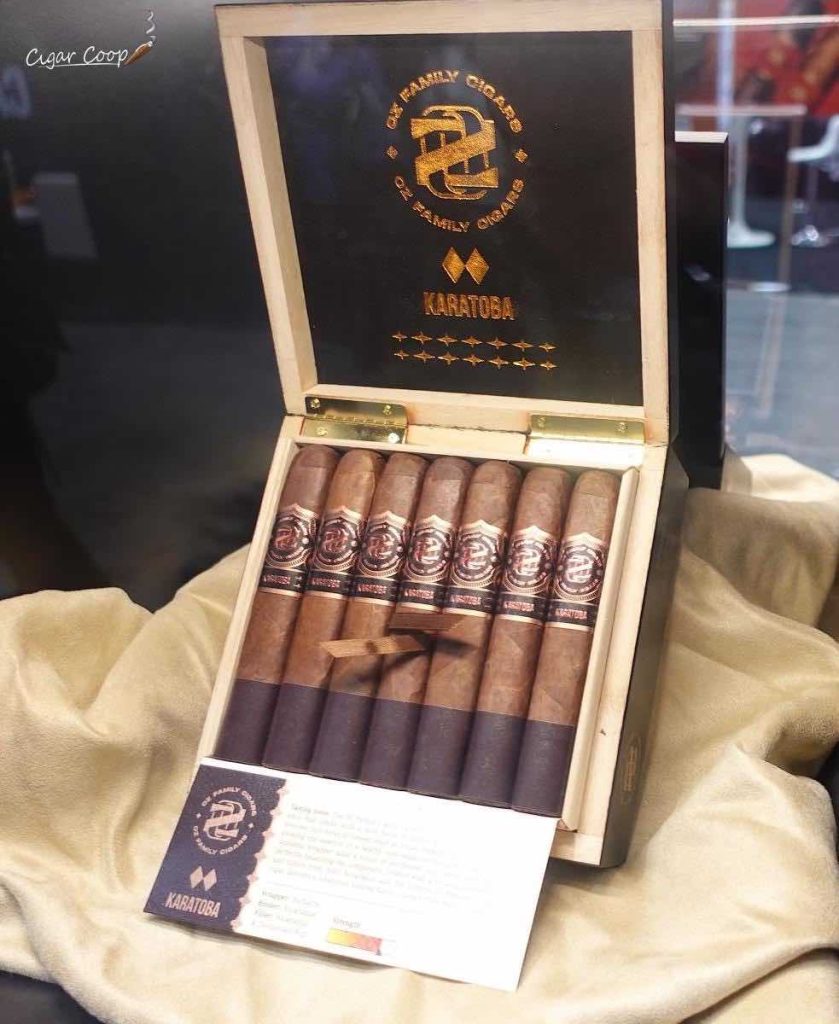
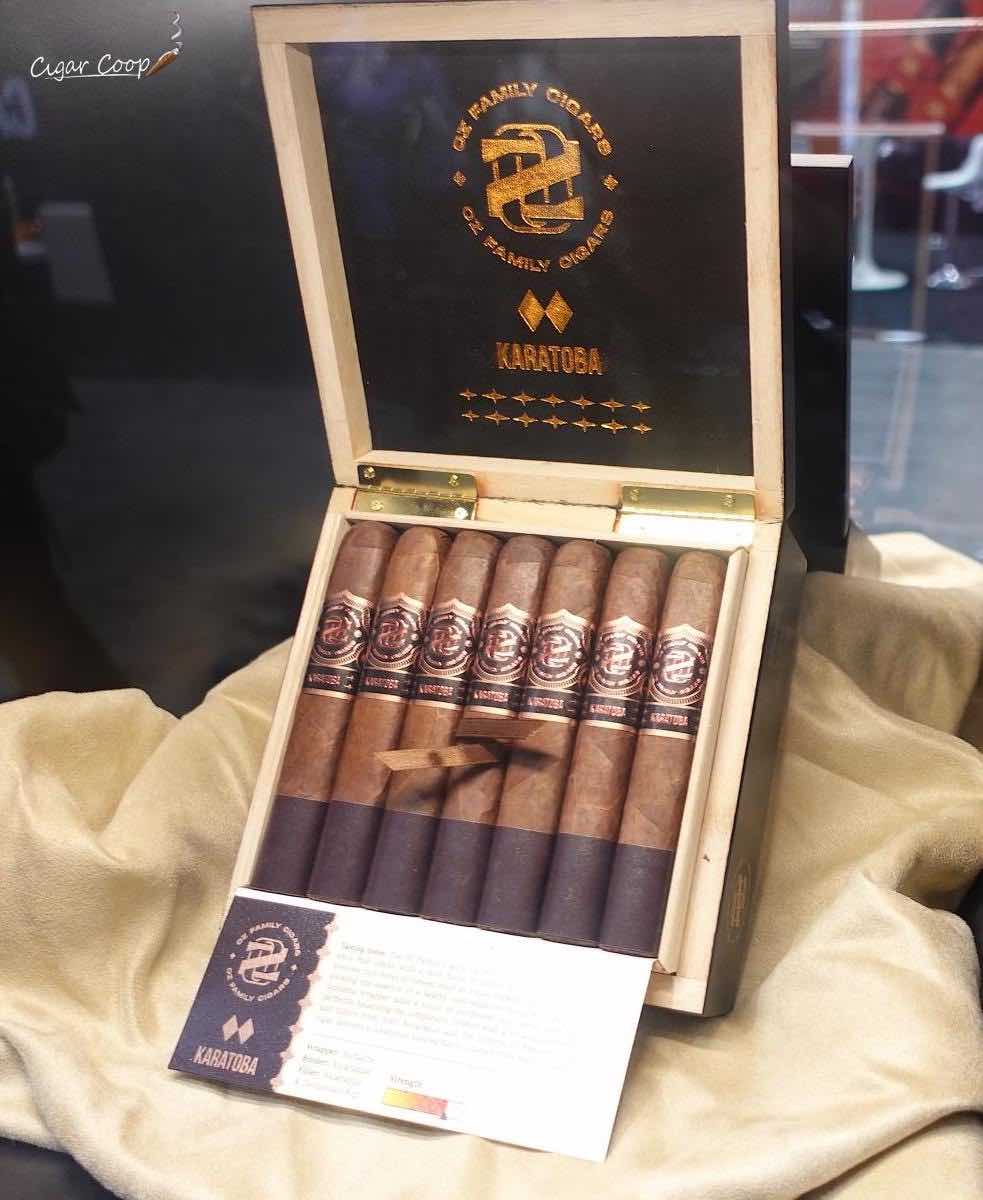
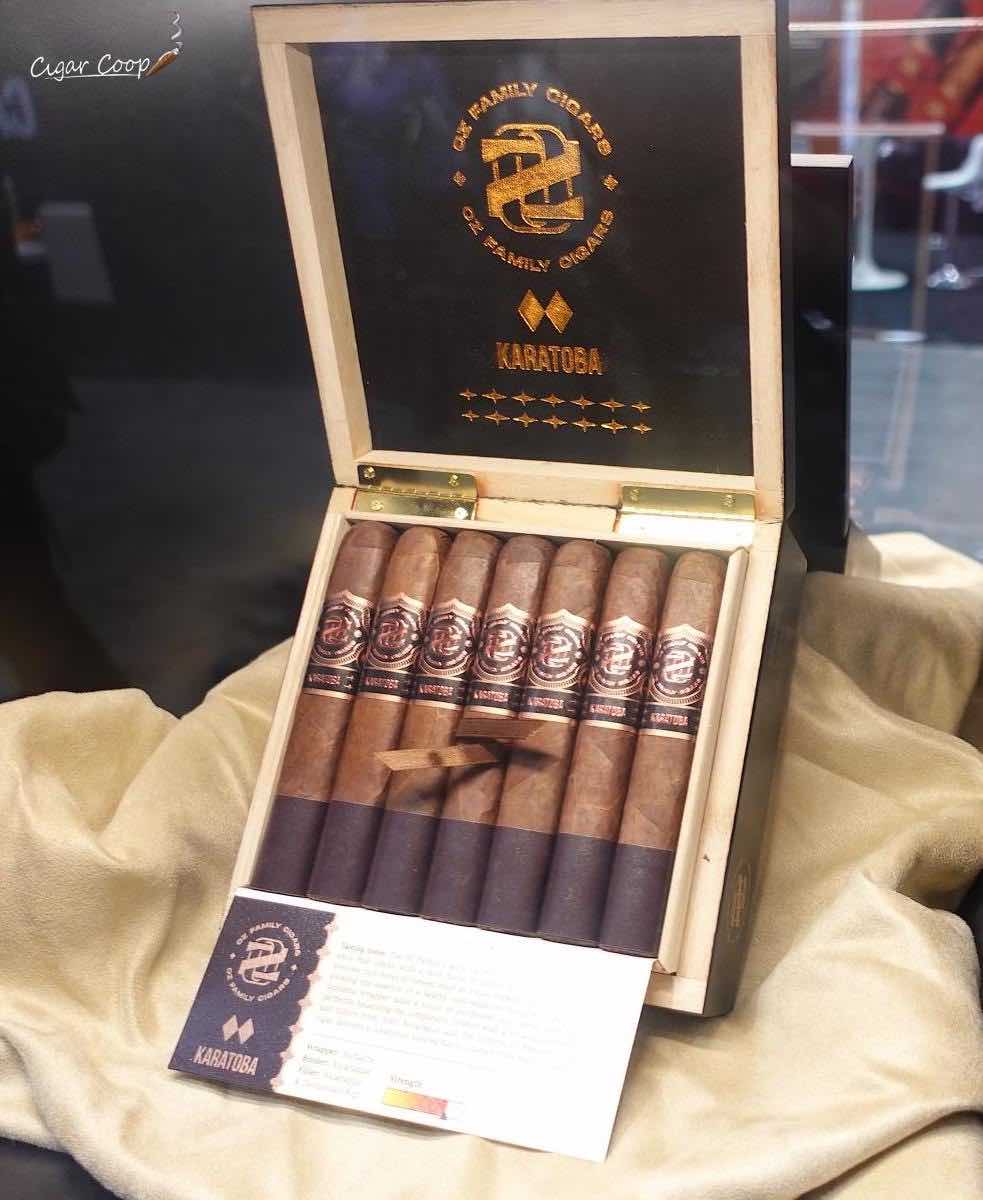
The Sumatra wrapper of the Karatoba K50 had a medium-to-dark roasted coffee bean color. The surface of the wrapper had some mottling, and it also created a nice marbling effect. There wasn’t much in the way of oils on this wrapper. The surface of the wrapper had some visible veins. There were also some thin visible seams. The cigar itself had a soft box-press – meaning there was a slight amount of curving on the edges.
PERFORMANCE
Pre-Light Draw (*)
A straight cut was used to commence the cigar experience of the Karatoba K50. Once the cap was removed, it was time for the pre-light draw ritual. The cold draw delivered a mix of coffee and floral notes. While I am not normally a fan of floral notes, the coffee notes had more presence, which helped make the pre-light draw experience satisfactory. With the pre-light draw out of the way, it was time to remove the ribbon of the Karatoba K50, light up the cigar, and move into the smoking stage.
Tasting Notes
The Karatoba K50 opened up with notes of fruit, grain, and coffee. Early on, there was no dominant note, but near the one-inch mark, the fruit note became the primary note. The grain and coffee notes settled in the background. On the retro-hale, there was a layer of mild black pepper mixed with some of the fruit sweetness.
Later, in the first third of the Karatoba K50, the coffee notes joined the sweetness at the forefront. This seemed to last only a brief time because just before the midway point, the coffee receded into the background. Meanwhile, the grain notes were joined by some milder black pepper on the tongue.
As the cigar entered the latter part of the second third, wood notes emerged at the forefront alongside fruity notes. Meanwhile, there was a slight increase in the pepper notes. By the final third, the wood displaced the fruit sweetness as the primary note. The fruit receded into the background, joining the coffee and pepper notes. The pepper notes were probably the most prominent. As for the grain notes, these had dissipated. As the Karatoba K50 came to a close, the resulting nub was soft to the touch and cool to the touch.
Burn
The burn of the Karatoba K50 maintained a straight burn path and straight burn line for the first two-thirds. On each sample, the final third needed a little more attention with touchups to keep the burn straight. The touchups did the trick, but the K50 needed more touchups than I would have expected. The resulting ash was silver to dark gray. This ash was definitely skewed toward the looser side. On one of the samples (see below), some flowering occurred. As for the burn rate and burn temperature, both were maintained at ideal levels.

Draw
On each cigar I smoked, I found the Karatoba K50 to have a very open draw. It wasn’t loose, but it was slightly close to being loose. Throughout the smoking experience, the open draw produced abundant layers of smoke. At the same time, I was able to control the draw to avoid any construction issues.
Strength and Body
The strength and body of the Karatoba K50 started as medium. Both the strength and body increase at a slow rate. By the second third, the body moved into medium-to-full territory. While the strength still increased slightly for the duration of the smoking experience, it did not move out of the medium range. In terms of strength versus body, the body held a significant edge for the duration of the smoking experience.
BANDING AND PACKAGING NOTES (*)
Much had been made about the “busy” bands on the Bosphorus, Aramas, and Firsat. I happened to really like those bands. Karatoba is simpler and creates a striking presentation. Both the copper and the black background go wonderfully with this cigar – especially the band against the Dark Sumatra marker. It also makes the Oz Family insignia pop a lot more.
OVERALL ASSESSMENT
Final Thoughts
Overall, I liked the way the Karatoba K50 started. Even though it was a little sweeter than I prefer, it produced some enjoyable flavors. As the cigar progressed, the flavor profile got a little less exciting. The flavors never got harsh, but when the woody notes surfaced in the final third, it didn’t have me doing handstands. The draw, while not terrible, didn’t excite me either. In the end, the Karatoba K50 scores a respectable 88 points, but it’s still a cigar I’d recommend trying to see if it’s for you.
Summary
- Key Flavors: Fruit, Coffee, Wood, Grain, Pepper
- Burn: Very Good
- Draw: Good
- Complexity: Medium
- Strength: Medium
- Body: Medium (1st Third), Medium to Full (Remainder)
- Finish: Good
Rating
Value: Try a Sample
Score: 88
REFERENCES
Photo Credits: Cigar Coop
(*) Indicates this is not factored into the score or value rating.