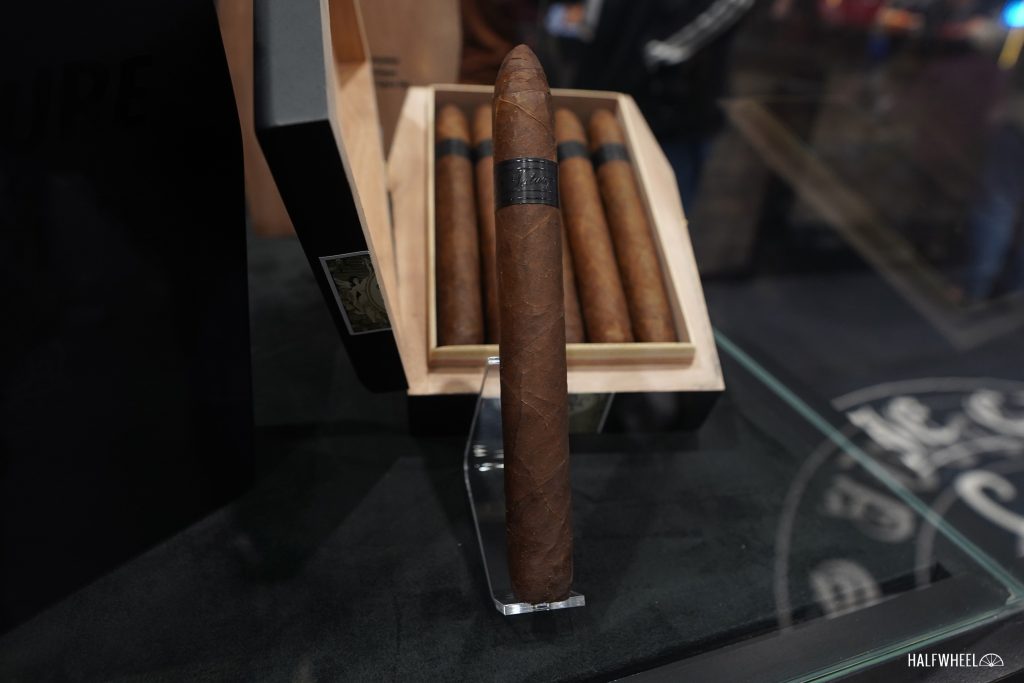
Powstanie’s first four regular production lines share a unique trait: they are offered in the same core vitolas. If you want a Powstanie Broadleaf, Connecticut, Habano or San Andrés in a belicoso, you will get one that measures 5 1/2 x 54.
For its fifth core line, Powstanie decided to switch things up. First of all, there—as of now—is no Powstanie Sumatra Belicoso. Second, the new Powstanie Sumatra line does not use any of the sizes—i.e. the specific lengths and ring gauges—that are shared by all of the other lines.
The Powstanie Sumatra debuted earlier this year. Blend-wise, it uses an Ecuadorian Sumatra-seed wrapper over binders from Mexico and Pennsylvania and fillers from the Dominican Republic and Nicaragua. While the vitolas might be different, the line is made at the same factory that makes the other Powstanie blends: Fábrica de Tabacos Nica Sueño S.A.

It’s offered in four box-pressed vitolas:
- Powstanie Sumatra Petite Robusto (4 3/4 x 50) — $13.50 (Box of 21, $283.50)
- Powstanie Sumatra Grand Robusto (5 1/2 x 52) — $14 (Box of 21, $294)
- Powstanie Sumatra Grand Toro (6 1/4 x 52) — $16 (Box of 21, $336)
- Powstanie Sumatra Churchill (7 x 48) — $15.50 (Box of 21, $325.50)
“We’ve been working toward a Sumatra expression for some time, and we couldn’t be more excited to share what we’ve created,” said Mike Szczepankiewicz, co-owner of Powstanie, in a press release in April. “The combination of tobaccos in this blend is something truly special — every component was chosen to elevate the others. This is a cigar built to make a statement.”

- Cigar Reviewed: Powstanie Sumatra Churchill
- Country of Origin: Nicaragua
- Factory: Fábrica de Tabacos Nica Sueño S.A.
- Wrapper: Ecuador (Sumatra-seed)
- Binder: Mexico & U.S.A. (Pennsylvania)
- Filler: Dominican Republic & Nicaragua
- Length: 7 Inches
- Ring Gauge: 48
- Shape: Pressed
- MSRP: $15.50 (Box of 21, $325.50)
- Release Date: May 2026
- Number of Cigars Released: Regular Production
- Number of Cigars Smoked For Review: 3
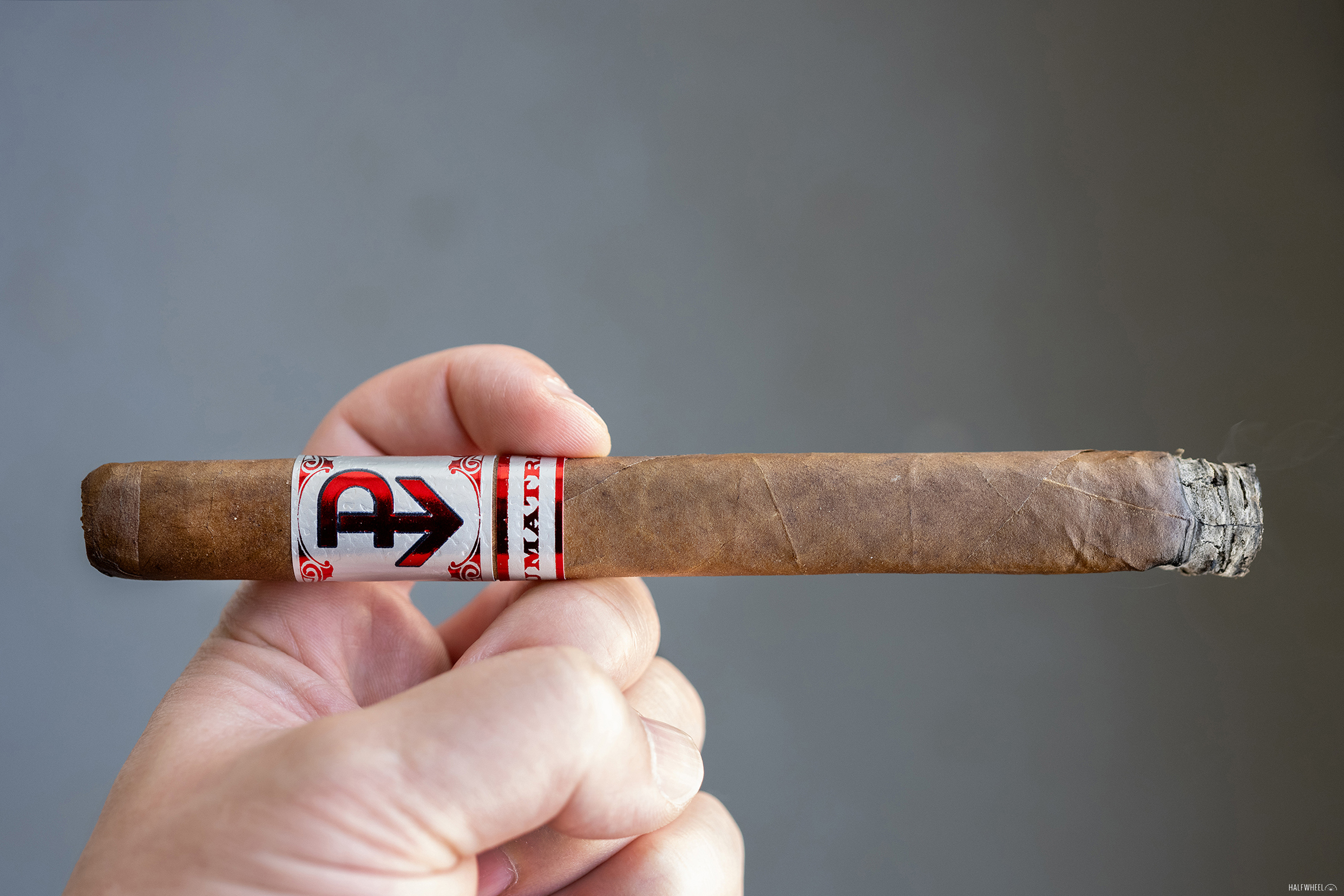
As a longtime fan of both the lancero and Churchill, my first reaction is that I’m a big fan of this vitola. With its square-shaped press, it seems even thinner than it is. As you can see above, the Sumatra wrapper is interesting in that some sections are littered with veins while others are entirely free of them. What is consistent is that this is a very red wrapper. The aromas from the wrappers aren’t all that strong. The first two cigars have barnyard with both ammonia and acidity, as well as a secondary smell that is quite stale. The third cigar is similar, but its wrapper has a milder scent with an added ketchup smell. The feet smell like semi-sweet cocoa and the familiar barnyard, a combination that reminds me of a cigar factory’s aging room. Oddly, the second cigar has a bit of a tomato smell, while the third cigar adds some dry grains. The first cigar is medium-full thorugh the other two are more medium-plus. I find the first cigar’s cold draw to be “weird”—the word is written in my notes—as it’s quite mild with just some plain cereal. The second cigar has a lot more flavors—peanut butter, animal crackers, and after 10 seconds, a distinct olive oil flavor—but the cereal flavor is the strongest. The third cigar is quite a bit different. First, its draw resistance is normal, whereas the other two were open. Second, there are way more flavors: grilled tomatoes, woodiness and a touch of floral sweetness at the end. It’s as if the third cigar is a completely different cigar.
The first two Powstanie Sumatra Churchills start similarly: loose draws and a medium-plus flavor profile that is led by woodiness. Secondary flavors include saltiness, herbs, roasted flavors and a muted black pepper, but it’s mostly just layers of woodiness. The third cigar has woods but with black pepper, earthiness and creaminess; and the draw is better than the others. Pretty early on in the first cigar, something is amiss. I’m having to use my lighter to deal with an uneven burn, but the flavor profile is also jumbled. There’s toastiness and woodiness accented by dry leather and mint leaves, but it creates a combination that does not work, as if they aren’t talking to one another. In contrast, the third cigar has a much denser profile led by leather and roasted woods with black pepper and a sweet syrup flavor that are very well integrated. The finish is drier, though the first two cigars do it thanks to a flour flavor that joins the woodiness and black pepper. The third cigar has a campfire flavor that dries out the palate before sweetness, sourness and leather emerge. Retrohaling produces similar results from the three cigars. Leather, damp woods and earth lead black pepper and a mild toastiness. During the finish, those flavors slowly depart with black pepper, toastiness and leather being the longest-lasting of the bunch. Flavor is full, body is medium-plus, and strength ranges from medium-plus to medium-full. Even after the early touch-up, the first cigar suddenly goes out during the first third and the second cigar needs to be rescued before suffering from a similar fate. While the open draw can produce some insane clouds of smoke, it seems to be the culprit for the cigars wanting to go out. The third cigar, with its normal draw, has no combustion issues.

There’s a lot more similarity between the three cigars in the second third. The lists of main flavors includes woodiness, dry earth, creaminess, bread and some black pepper. However, in the first two cigars, there’s a lack of density and some complexities that the third cigar has. For example, the third cigar’s woodiness is noticeably sweeter, the creaminess has a thickness and sweetness that reminds me of butter, and there’s some added caramel. All of those things combine to elevate that cigar to a level or two above how the first two Powstanie Sumatra Churchills are smoking. That contrast is even more noticeable on the finish. Whereas the first two cigars are oftentimes just getting harsher, the third cigar adds more creaminess, a pork-like meatiness and a mild perfume flavor I can’t quite place. Retrohales are a lot more intense. The core is a mixture of leather and terroir, though the first cigar has some unique fruit tea sweetness. The dry cereal flavor that was present on the cold draw emerges briefly during each cigar. The third cigar adds some isolated toastiness and white pepper, though the larger change is that it gets sweeter during the finish. The main flavor is medium-full, though retrohales are consistently full, body is medium-full and strength varies between medium and medium-plus. Unfortunately, both the first and second cigars are continuing to struggle with combustion issues, including the second cigar requiring a full relight. It seems like a case of once the combustion issues start, they just become more frequent. While the third cigar avoids going out, it starts to need regular touch-ups.

Unfortunately, the combustion issues of the first two cigars have wrecked their flavor profiles. Harsh woods, dry earth, sourness, saltiness—sure, there are some redeeming flavors, but they are quickly engulfed by off-putting sensations. Both cigars taste like a cigar that has had construction issues. By contrast, the third cigar has plain crackers, leather, white pepper and some mild sweetness. Fortunately, the finish of each cigar is enjoyable. The first cigar has lots of sharp red pepper over leather, earth and barnyard. The second cigar is similar but with less red pepper and more creaminess and an appearance by the mint. The third cigar continues to present itself as a different cigar with dry crackers, spiciness and toastiness. The retrohales of the first two cigars are similar to the flavors in the mouth, with far less harshness. That seems to allow the woodiness to return—perhaps it was just being masked by the harshness—along with some sunflower seeds. Retrohales on the third cigar start with a very dry floral flavor that quickly transitions to a fruity perfume blend with some creamy earth that outlasts all the other sensations. Or at least that’s what I think; 10 seconds later, the perfume note is somehow still present but with some creaminess and chili pepper. As frustrating as much of the first two cigars have been, the third cigar’s retrohale is impressive, as it’s sweeter and thicker than the rest of the profile. Flavor is full, body is medium-full, and strength is medium or medium-plus. Combustion is a complete mess with all three cigars needing multiple corrections from my lighter.

Final Notes
- Powstanie launched in 2015 with the Broadleaf and Habano blends. It wasn’t until 2023 that a third core line was added. However, this is the third new core line in four years. That’s a very unique progression.
- RoMa Craft Tobac’s Intemperance Volstead VO 1920 line uses an Ecuadorian Sumatra hybrid wrapper. The two wrappers do not appear to be the same; the Volstead’s wrapper is much darker and seems thicker.
- When a factory is using a particular tobacco, especially wrapper, it’s going to have to find uses for the leaves it grows or buys that don’t meet the specifications it needs for a particular blend. This could be due to thickness, color or even size. While I don’t know if this wrapper comes from the purchases the factory is making for Volstead, it certainly wouldn’t surprise me.
- The first two cigars might as well have been a different blend than the third cigar, as the experiences were more dissimilar than they were similar. I suspect this all comes down to how the cigars were bunched and, therefore, how they drew. The draws affect how the cigars burn, or don’t burn, and the relights are likely to be blamed for a lot of my issues with how the cigars tasted.
- I’d be willing to bet that I had more combustion issues with these three cigars than I’ve had in my three most recent Powstanie reviews combined.
- Nica Sueño is known for rolling cigars that feel denser than average and yet have very normal draws. The density of these cigars seemed like a typical cigar, not a typical Nica Sueño cigar, though that lack of firmness could be because of the box pressing.
- Looking back on how the three cigars went, the lifeless cold draw of the first cigar was a foreshadowing moment. Of late, Powstanie has been one of the best-performing brands on halfwheel, and that first cold draw was so weird.
- The cigars for this review were purchased by halfwheel.

- Powstanie lists these cigars as 7 x 48. Above are the dimensions I found for the three cigars I smoked. As I noticed when smoking them, the cigars aren’t that
- Final smoking time was right around two and a half hours.
- Site sponsor Small Batch Cigar carries the Powstanie Sumatra Churchill.
81
Overall Score
The loose draws on the first two cigars torpedoed the score and made this review quite frustrating. I suspected that with a better draw, there would be a lot more to taste. The third Powstanie Sumatra Churchill proved that to be true, but it too struggled from combustion issues. While not every Powstanie I’ve smoked has been a home run, I can’t think of one that struggled quite like this. It’s a shame, as on paper, this seemed like a combination that was right up my alley.
Churchill
Fábrica de Tabacos Nica Sueño S.A.
Nicaragua
Powstanie
Powstanie Sumatra
Powstanie Sumatra Churchill